Ultrasonic Cleaning and Passivation for Critical Components

Why Lasermed Tech for Ultrasonic Cleaning and Passivation for Critical Components
Precision cleaning means removing every contaminant a visual inspection won't catch: machining oils, particulate, oxide scale, and biofilm that compromise surface integrity and passivation adhesion. Ultrasonic cleaning is the standard for medical device and aerospace components because cavitation reaches geometries that manual or batch cleaning can't. At Lasermed Tech, we've spent seven years refining this process for parts where surface condition isn't a preference — it's a specification. If your components require validated cleaning prior to passivation, laser marking, or final assembly, call (612) 800-0784 and speak directly with Gary Graham.
The cleaning and passivation sequence matters as much as the chemistry. Ultrasonic cleaning typically runs through staged baths — degreasing, aqueous wash, rinse, and dry — before citric acid or nitric acid passivation removes free iron from the stainless steel surface and allows the native chromium oxide layer to rebuild. What drives cost and turnaround is part geometry, alloy grade, contamination level, and whether your specification calls for citric or nitric passivation per ASTM A967 or AMS 2700. Small validation lots and high-volume production runs are handled differently, and we scope both. Every job is different — contact Lasermed Tech for an accurate estimate.
Have a project in mind?
Talk to our owners directly — same-day response.
What Ultrasonic Cleaning Actually Does to Your Part
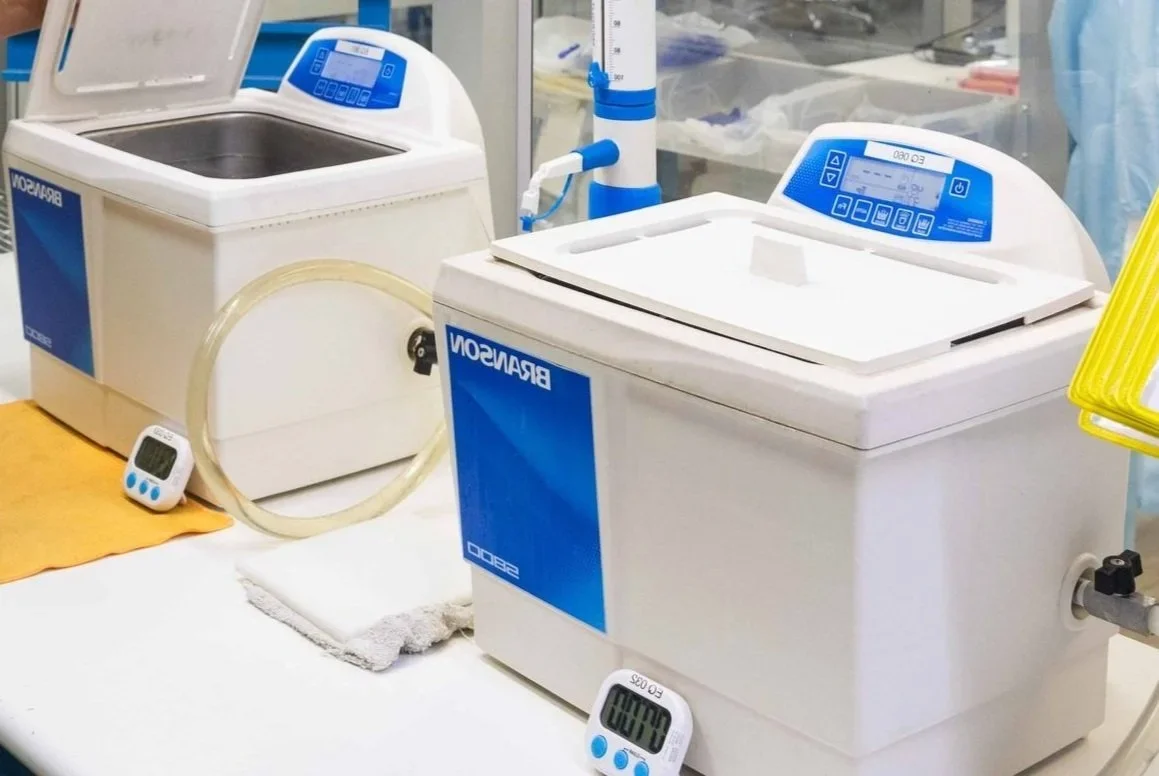
Ultrasonic cleaning uses high-frequency sound waves (typically 20 to 400 kHz) to generate microscopic cavitation bubbles in a liquid bath. Those bubbles collapse against the part surface with enough localized force to dislodge oils, particulate, and oxide without abrasion. For components with blind holes, threads, undercuts, or complex internal geometries, it's the only reliable method. Abrasive media won't reach those areas. Manual solvent wipe won't either. We run heated aqueous baths with validated detergent chemistry, and we confirm cleanliness against your specification before the part moves to the next stage. We won't hand you a part and assume it's clean — confirmation is part of the process.
Stainless Steel Passivation: What the Process Removes and Why It Matters
Passivation of stainless steel is a chemical treatment that removes free iron from the surface layer — iron deposited there by machining, handling, or forming. Free iron corrodes and, in a medical or implant-adjacent environment, can compromise biocompatibility. The passivation bath, whether citric acid (typically 4 to 10 percent at 140 to 160 degrees Fahrenheit) or nitric acid per ASTM A967, dissolves that iron and allows chromium to re-oxidize, forming the stable passive film that makes stainless steel actually corrosion resistant. Lasermed Tech processes 300-series, 400-series, and 17-4 PH stainless to customer-specified standards. If you've had parts rust after machining, that's a surface chemistry problem, not a material problem. It's fixable.
Want it done right?
Precision laser processing on production timelines — call to scope your project.
The Cleaning Sequence Before Passivation
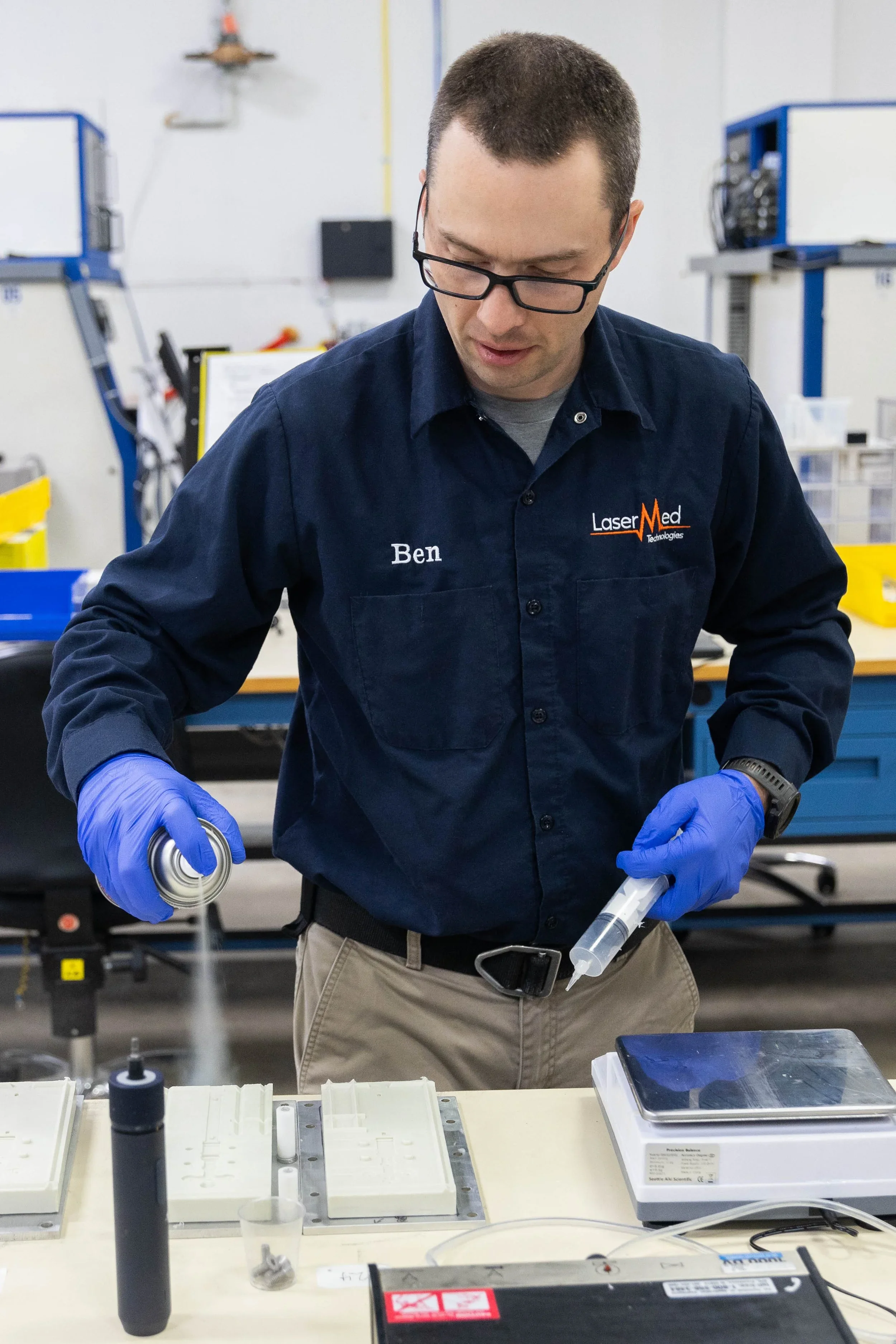
Passivation on a contaminated surface fails. The chemistry can't reach the metal through a film of cutting fluid or oxide. The sequence we run for medical and industrial parts starts with solvent or ultrasonic degreasing to remove organic contamination, moves through an aqueous wash stage with appropriate detergent concentration and temperature, then a DI water rinse, then a dry stage — before any passivation chemistry is introduced. For parts that go directly to laser engraving or assembly after passivation, we package to prevent recontamination. Skipping steps to save time creates rework. We don't do that.
Key Process Parameters: What Good Passivation Looks Like
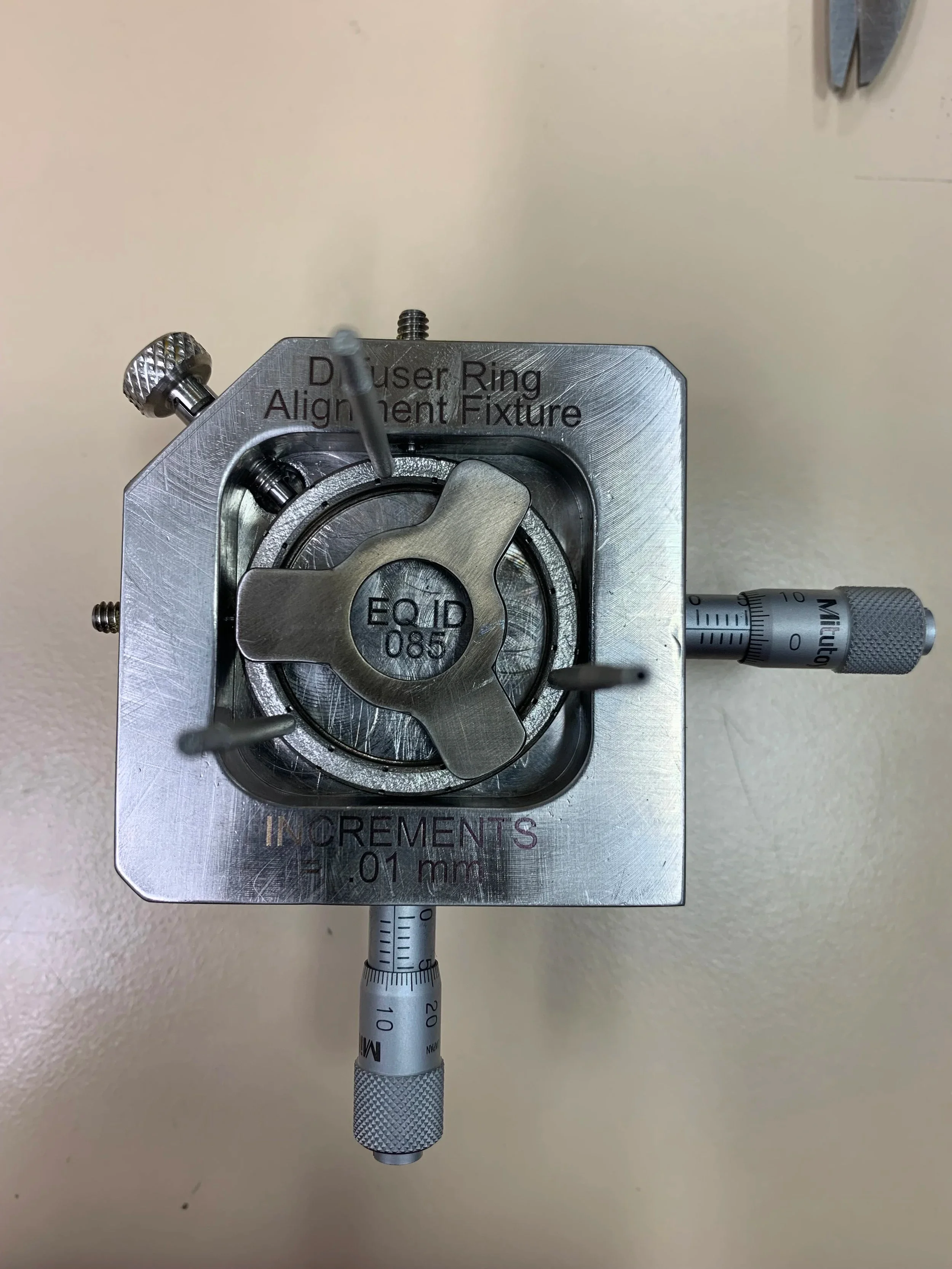
Properly passivated stainless steel resists the copper sulfate test (no copper deposition in 6 minutes), passes the water immersion test, and shows no rust or staining after 24-hour humidity exposure per ASTM A967 Section 8. These aren't aspirational benchmarks — they're the pass/fail criteria that determine whether a part ships. Temperature control, bath concentration, immersion time, and rinse water purity are the variables that separate a controlled process from a batch operation. Parts coming off precision laser tube cutting or metal fabrication often have heat-affected zones and oxide scale that need specific attention during cleaning. We document process parameters per lot so your quality team has what it needs for device history records.
Want it done right?
Precision laser processing on production timelines — call to scope your project.
Why Medical and Aerospace Buyers Specify Ultrasonic Cleaning
These are the reasons ultrasonic cleaning appears in medical device and aerospace cleaning specifications:
- Reaches internal channels, threads, and blind holes that manual cleaning physically can't access
- Generates no abrasive contact with the part surface, preserving dimensional tolerances and finishes
- Validated bath chemistry and temperature provide repeatable, documentable results per lot
- Removes particulate down to sub-micron sizes that would compromise optical coatings or implant surfaces
- Compatible with most metals, alloys, and engineering polymers used in device manufacturing
- Staged rinsing eliminates detergent residue that causes adhesion failures in downstream bonding or coating steps
For teams building to FDA quality system requirements, process validation of cleaning steps is not optional. We understand what your documentation needs look like. See our facility for more on how we run controlled manufacturing environments.
Common questions
Still have questions?
Reach out to our owners directly — we'll walk you through it.
You might also be interested in

Assembly and Packaging
Learn morePrecision Cleaning and Passivation for Medical-Grade Parts
Learn more
Design and Product Development for Precision Manufacturing
Learn more
3D Printing and Rapid Prototyping for High-Spec Parts
Learn more
Custom Tooling & Process Solutions
Learn more
Prototype Composite and Silicon Molding for Short Runs
Learn moreAccelerate your time to market.
Reach out to our owners directly. Rapid prototyping, precision laser processing, and production-ready solutions — on your timeline.