Precision Cleaning and Passivation for Medical-Grade Parts

Why Lasermed Tech for Precision Cleaning and Passivation for Medical-Grade Parts
Precision cleaning and passivation are the final gatekeepers between a finished part and a device that's ready for clinical use. At Lasermed Tech, we run these processes in a dedicated section of our facility built specifically for post-manufacturing refinement. Passivation removes free iron and surface contaminants from stainless steel, forming a chromium oxide layer that resists corrosion from bodily fluids, cleaning agents, and sterilization cycles. If your device doesn't hold that surface chemistry, it doesn't meet ISO 13485 or ASTM A967. Call us at (612) 800-0784 and we'll tell you exactly what your parts need.
The process varies depending on alloy type, surface geometry, and the regulatory pathway your device is following. 316L stainless responds differently than 17-4 PH. Parts with laser-welded joints or laser-engraved surfaces need cleaning protocols that account for heat-affected zones and oxide deposits left by prior operations. Cost drivers include batch volume, material grade, documentation requirements, and whether the parts require ultrasonic cleaning before passivation or aqueous rinse stages after. Every job is different. Contact Lasermed Tech for an accurate estimate.
Have a project in mind?
Talk to our owners directly — same-day response.
What Passivation Actually Does to Your Stainless Steel Part
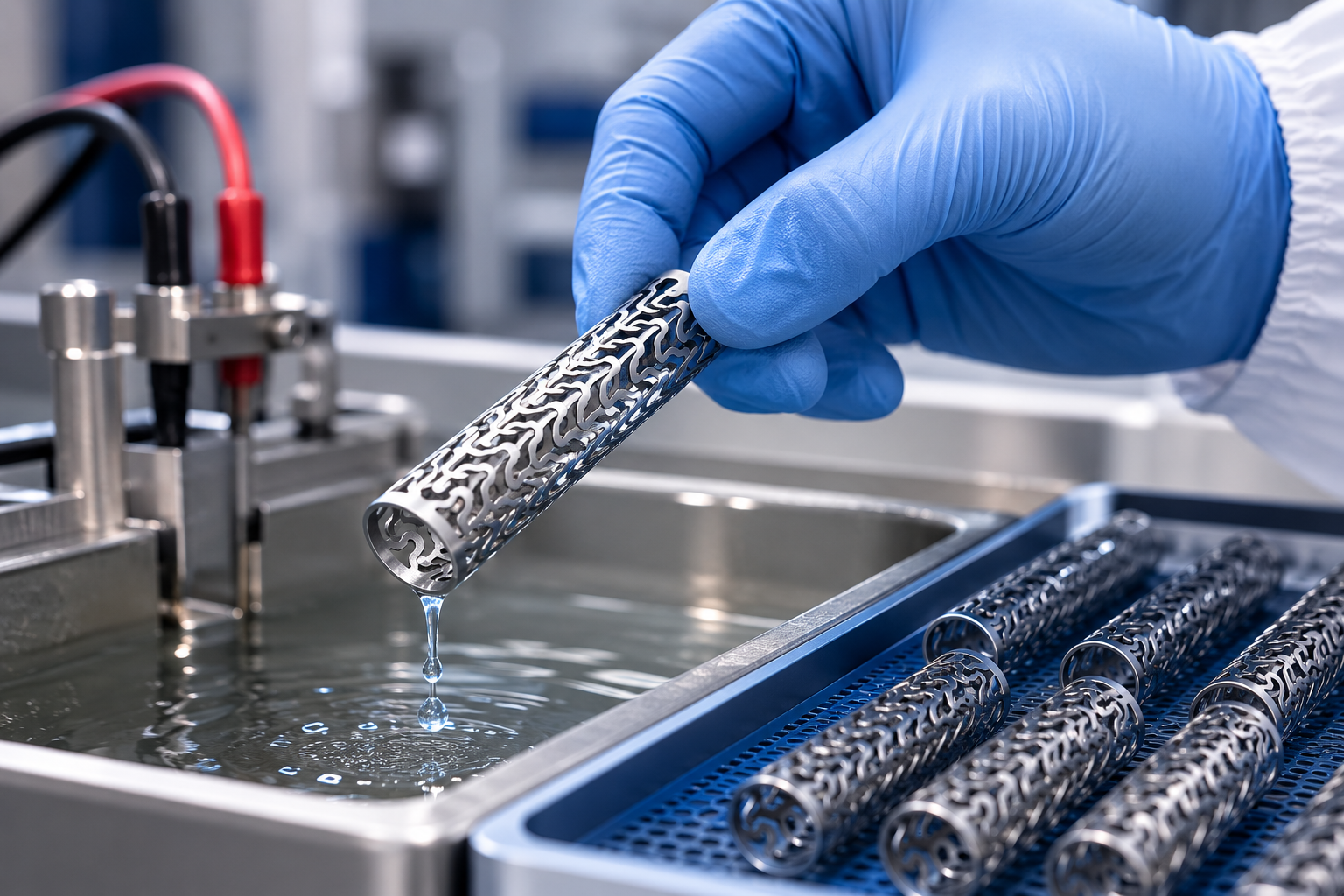
Passivation is a chemical treatment, not a coating. It strips the surface of free iron contamination introduced during machining, laser cutting, or laser tube cutting, and promotes the formation of a dense chromium oxide passive layer. That layer is what makes austenitic and martensitic stainless steels genuinely corrosion-resistant in clinical environments. Without it, a part that looks clean under white light can still harbor electrochemically active sites that corrode on contact with saline or plasma. We use nitric acid and citric acid bath processes, selecting the chemistry by alloy type and geometry. You won't get a one-size-fits-all bath here.
Six Properties Our Cleaning and Passivation Process Protects
Here's what the process delivers, and why each one matters to device performance and regulatory review:
- Corrosion resistance: the passive layer protects against bodily fluids and harsh disinfection environments, extending service life.
- Biocompatibility: removing ionic contaminants reduces cytotoxic risk, which matters for implant-contact components.
- Sterilization compatibility: a properly passivated surface survives repeated autoclave, EtO, and gamma cycles without pitting.
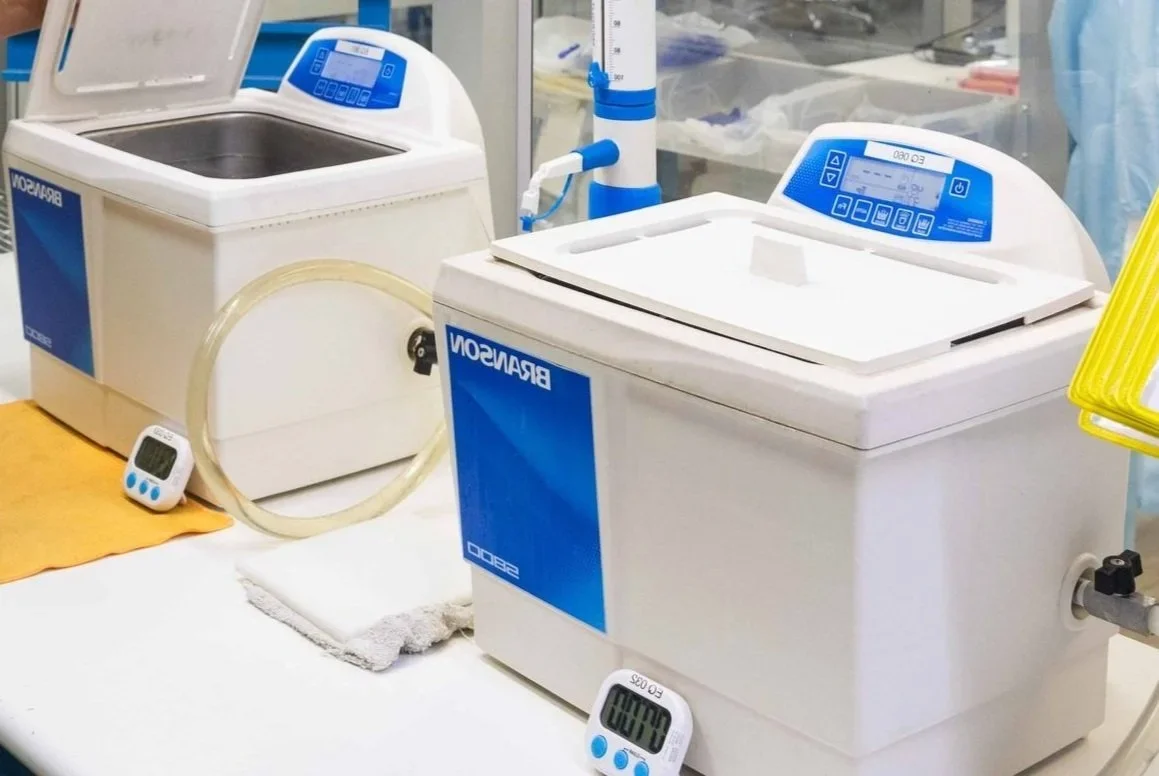
- Surface cleanliness: ultrasonic and aqueous pre-cleaning stages remove particulate, oils, and processing residues before the chemical bath.
- Lubricity improvement: smooth, oxide-free surfaces reduce tissue trauma on insertion for catheter shafts and stylets.
- Regulatory compliance: we document bath chemistry, concentration, temperature, and exposure time to support your FDA submission or ISO audit.
These aren't abstract benefits. They're the line items that show up in your design history file.
Want it done right?
Precision laser processing on production timelines — call to scope your project.
How We Run the Process at Our Facility
Our cleaning and passivation operations occupy a dedicated section of our facility, physically separated from machining and laser processing areas to prevent cross-contamination. Parts move through ultrasonic cleaning, aqueous rinse stages, chemical passivation bath, post-passivation rinse, and dry-out before final inspection. We maintain bath concentration and temperature logs for every batch. If your parts also require post-processing services such as deburring or surface finishing before passivation, we handle the sequencing internally so nothing leaves the building half-done. Gary Graham and the team have been running this process for 7 years. The documentation we hand back to you is audit-ready.
When Precision Cleaning Alone Isn't Enough
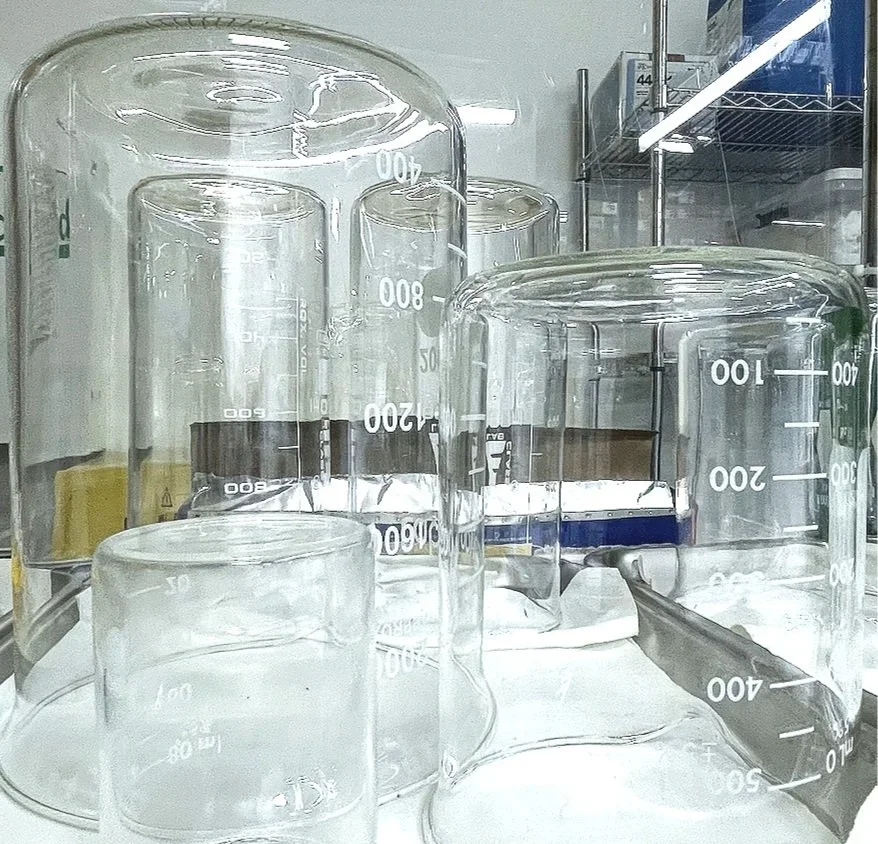
Some customers arrive thinking a solvent wipe and a rinse covers it. It doesn't. Honestly, aqueous ultrasonic cleaning without passivation leaves stainless steel parts technically clean but chemically vulnerable. If your device contacts blood, interstitial fluid, or gets reprocessed in a hospital CSSD, the surface chemistry matters as much as dimensional accuracy. Parts that come to us from metal 3D printing or laser processing often carry oxide layers, sintering residue, or spatter that a basic wash won't touch. We won't sign off on a batch we can't stand behind. If your parts require a process we'd recommend against, we'll say so.
Want it done right?
Precision laser processing on production timelines — call to scope your project.
Industries and Applications We Support
We clean and passivate components for medical device OEMs, life sciences instrumentation manufacturers, aerospace suppliers, and industrial equipment producers. Common parts include surgical instruments, catheter components, implant trials, endoscopic accessories, and precision fluid-handling assemblies. Parts that go through our assembly and packaging line often receive cleaning and passivation as the penultimate step before final pack-out. If your device has already been validated to a passivation spec and you need a production-capable supplier who can hit that spec consistently, reach out. We work from your protocol or we develop one together.
Accelerate Your Time to Market With a Documented, Repeatable Process
Delays at the cleaning and passivation stage are almost always documentation problems, not chemistry problems. We build the batch records, SOP references, and material traceability into every run so your QA team isn't chasing paperwork after the fact. Rapid prototyping, precision laser processing, and production-ready solutions all depend on a clean handoff at the final surface treatment step. If you need a supplier who can move fast and still produce records your auditor will accept, call (612) 800-0784 or visit our contact page. Reach out to our owners directly. Gary Graham picks up.
Common questions
Still have questions?
Reach out to our owners directly — we'll walk you through it.
You might also be interested in

Assembly and Packaging
Learn more
Design and Product Development for Precision Manufacturing
Learn more
3D Printing and Rapid Prototyping for High-Spec Parts
Learn more
Custom Tooling & Process Solutions
Learn more
Prototype Composite and Silicon Molding for Short Runs
Learn more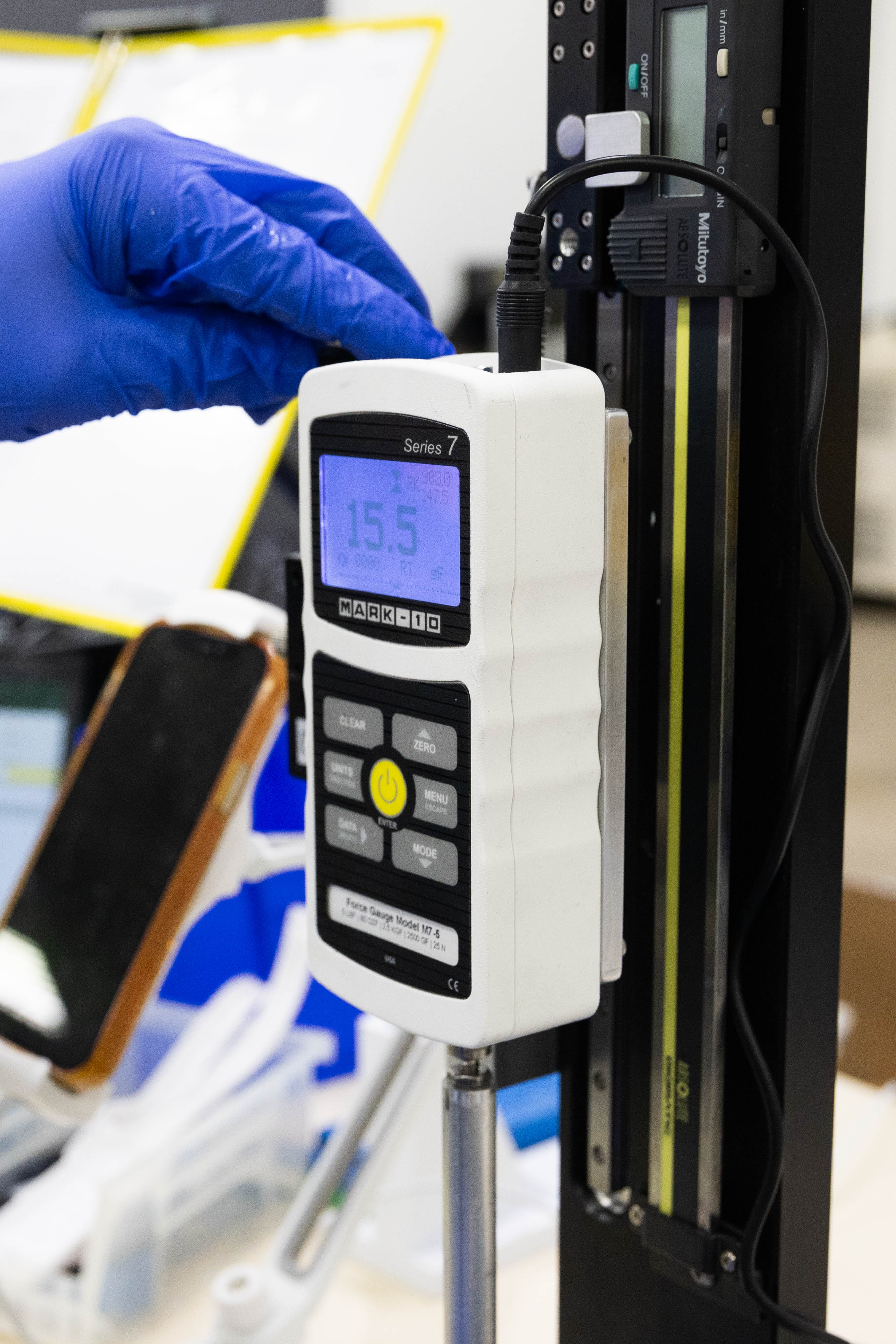
Testing Capabilities That Confirm Your Parts Are Production-Ready
Learn moreAccelerate your time to market.
Reach out to our owners directly. Rapid prototyping, precision laser processing, and production-ready solutions — on your timeline.