Why Lasermed Tech for Laser Marking: Permanent, High-Contrast Results
Laser marking fuses a permanent, high-contrast mark onto the surface of your part without removing material — like a welder lays a bead, not a chisel cutting wood. Lasermed Tech has been running this process for over 7 years, fully insured, on materials ranging from surgical-grade stainless steel to copper to Nitinol. If you need UDI-compliant device marking, high-contrast barcodes, or surface texturing that holds up under sterilization cycles, we can turn your files around fast. Call us directly at (612) 800-0784 or reach out through our contact page.
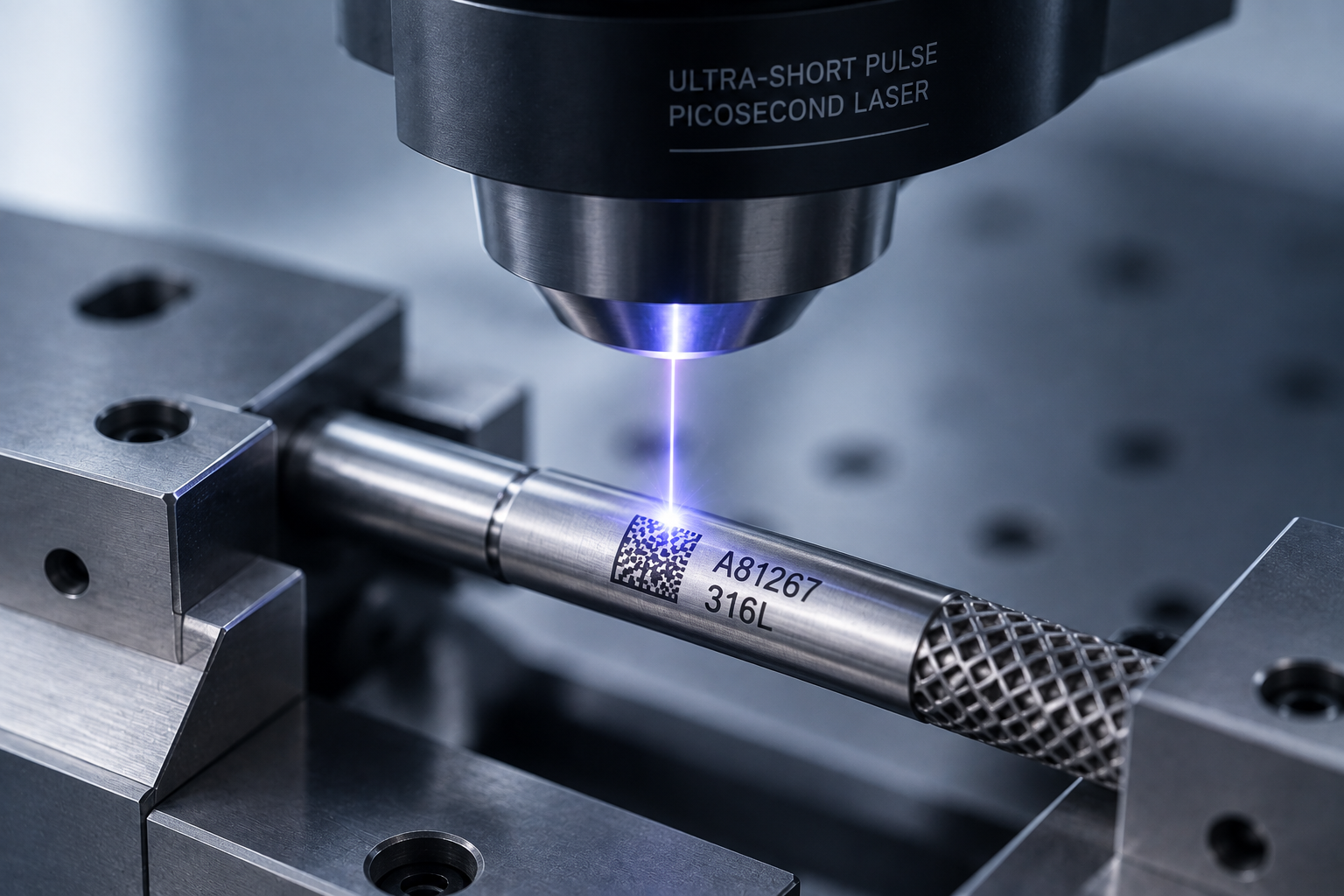
What drives cost and complexity on a laser marking job? Material hardness, surface finish, feature geometry, and whether the mark needs to meet a regulatory spec like UDI. A simple serial number on flat aluminum runs quickly. A photorealistic 3D texture engraved across a curved titanium surface at multiple depths is a different scope entirely. Our picosecond laser or ultra short pulse laser removes material with no heat-affected zone, no discoloration around the mark, and no compromise to corrosion resistance on passivated parts. Pricing scales with run volume, material, and artwork complexity. Every job is different, so contact Lasermed Tech for an accurate estimate.
Have a project in mind?
Talk to our owners directly — same-day response.
Materials We Run and What Each Requires
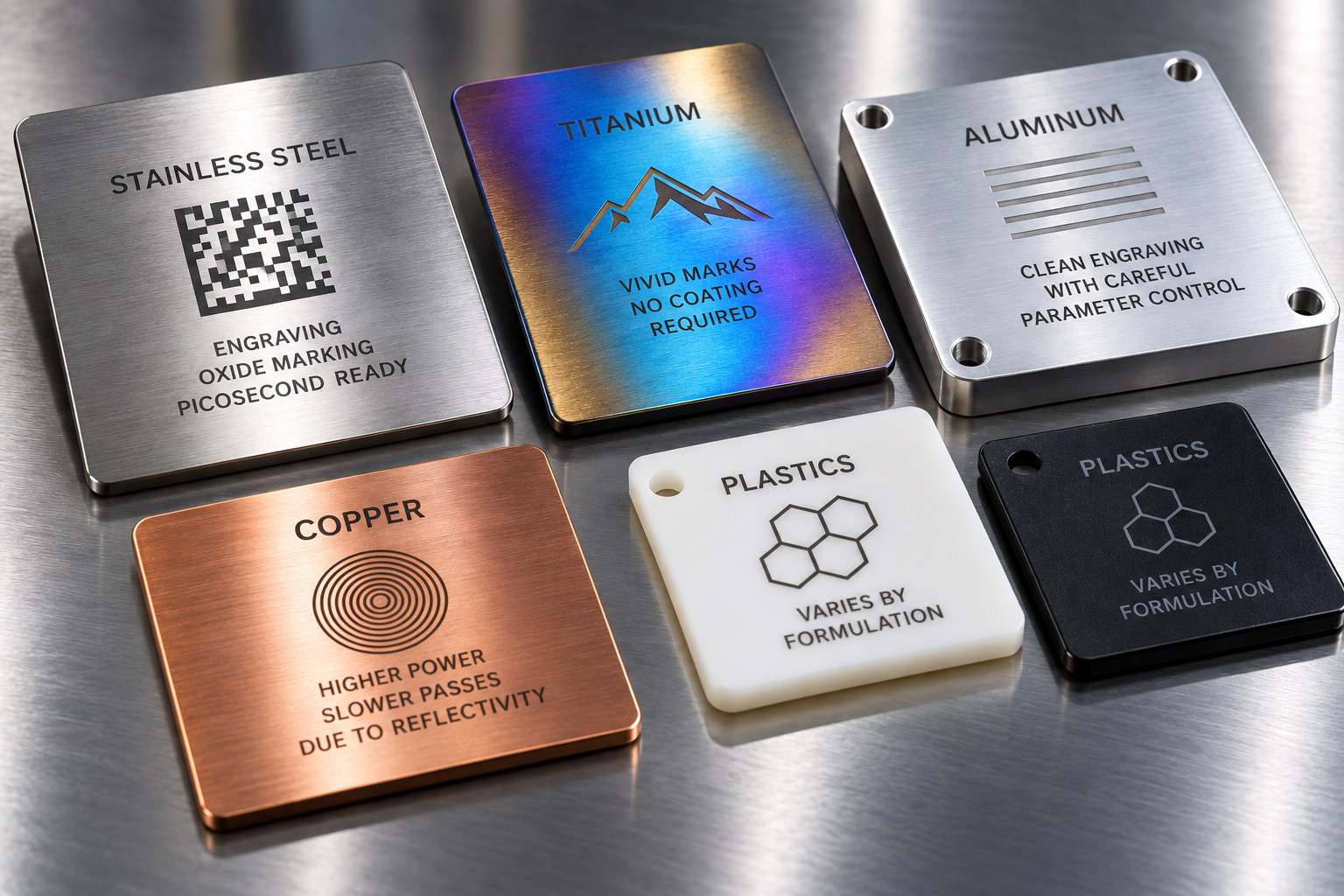
Different materials respond differently to laser energy. Stainless steel works well for engraving and oxide marking, with picosecond marking preferred for passivated or electropolished surfaces. Titanium can produce vivid marks without coatings, while aluminum engraves cleanly with careful parameter control. Copper requires higher power and slower passes due to its reflectivity, and plastics vary widely by formulation. If your material isn't listed, contact our team to discuss feasibility before your run.
Laser Marking Applications & Capabilities
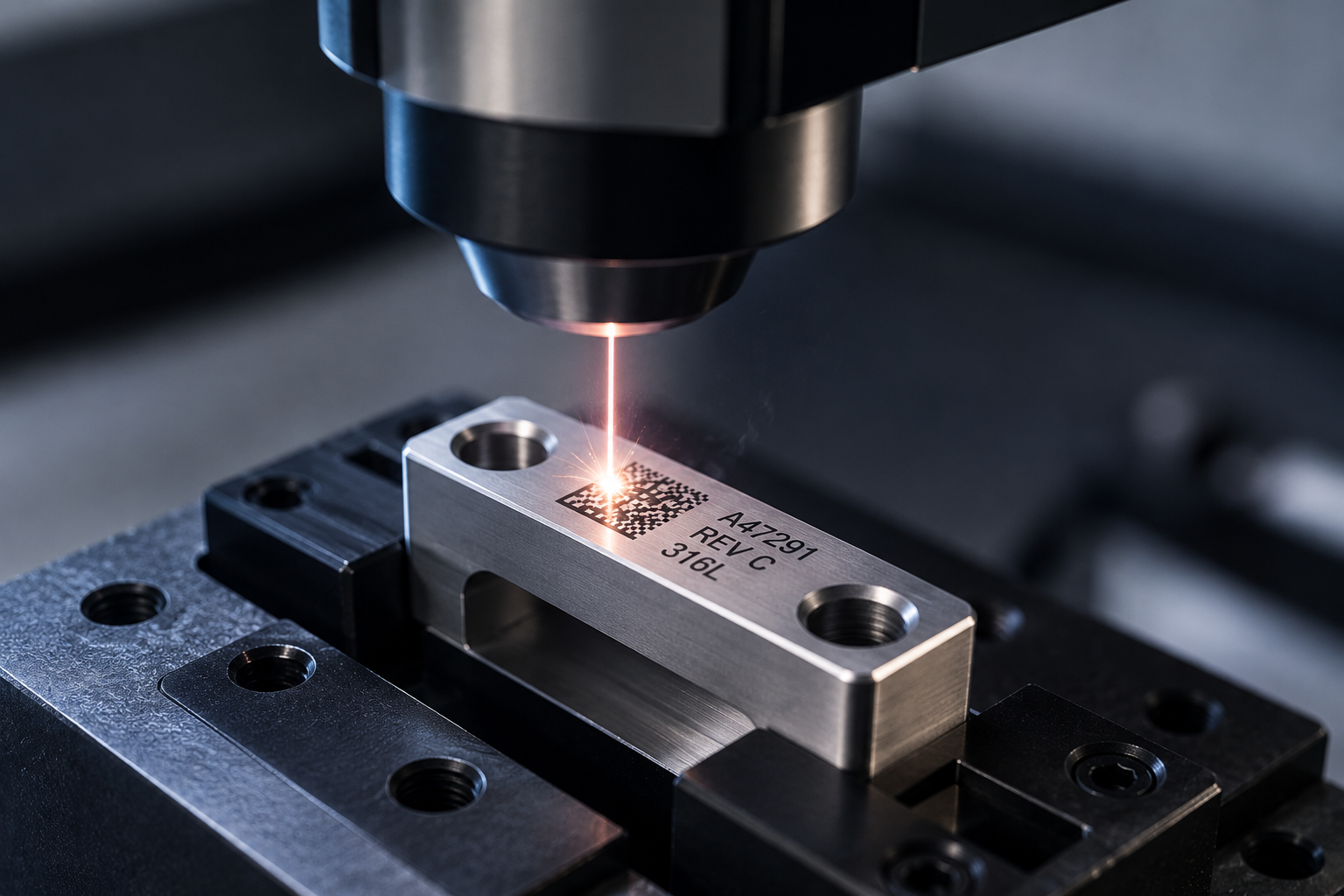
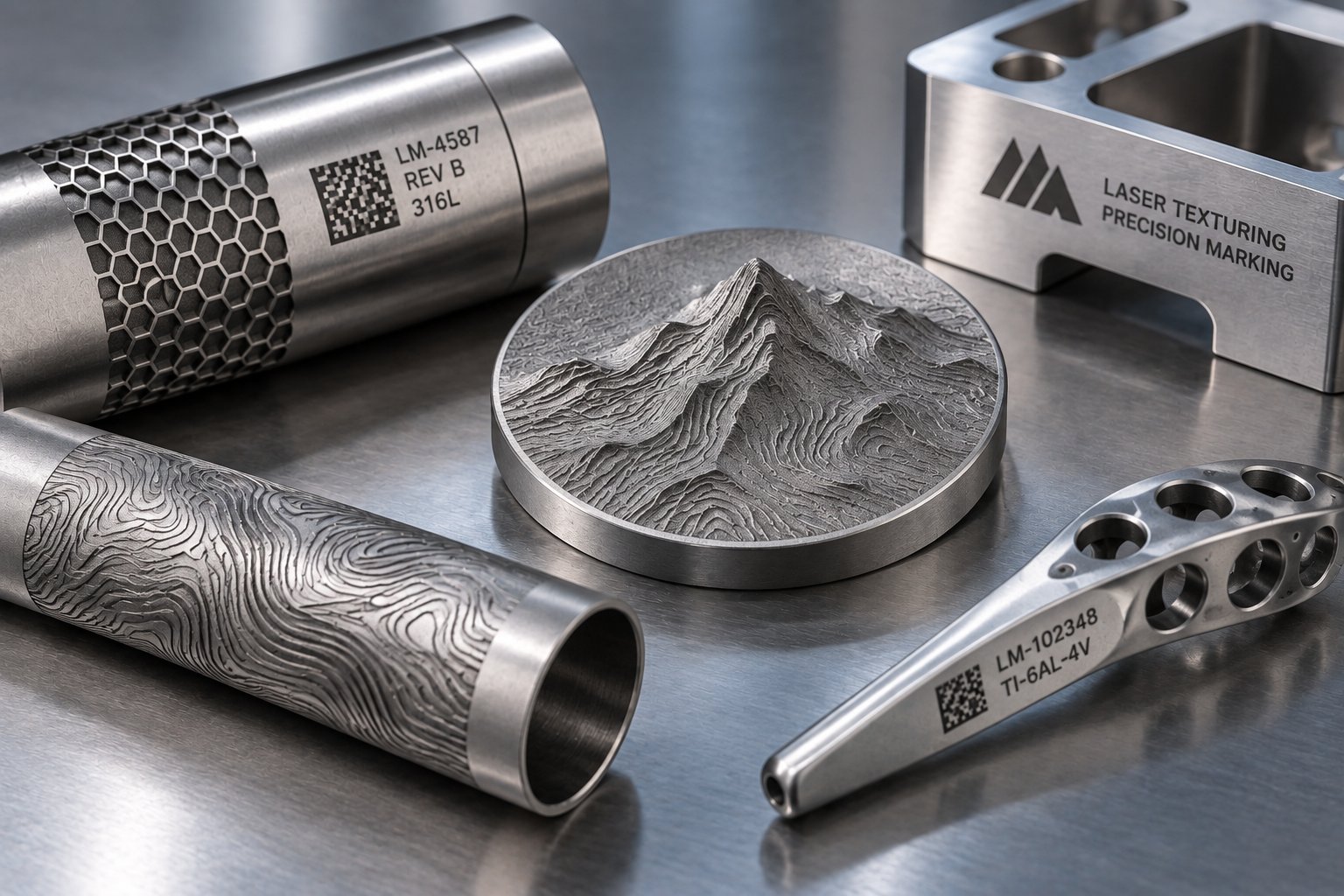
Laser marking provides permanent, precise identification without adding labels or coatings to the part. LaserMed Tech can produce UDI marks, Data Matrix codes, serial and lot numbers, barcodes, logos, graphics, measurement marks, and other traceability features on a range of component geometries and materials. For applications requiring more than identification, we can also create surface textures and detailed patterns for functional or aesthetic purposes. Marking parameters are tailored to the material, surface finish, geometry, and required contrast to produce clean, repeatable results from prototypes through production quantities.
Want it done right?
Precision laser processing on production timelines — call to scope your project.
3D Surface Texturing & Complex Part Geometry
Laser marking isn't limited to flat surfaces or a single depth. Lasermed Tech can create multi-depth 3D surface textures for functional or aesthetic applications, including mold texturing, anti-slip surfaces, detailed patterns, and permanent branding on production components.
We can also mark and texture curved surfaces, tube ODs, and other complex geometries. Part geometry, fixturing, material, and feature size all influence the process, so our team evaluates each application to determine the best approach. For components that also require precision cutting, our laser marking capabilities can be combined with precision laser tube cutting to keep multiple laser processes under one roof.
Picosecond / Ultra-Short Pulse Laser Marking
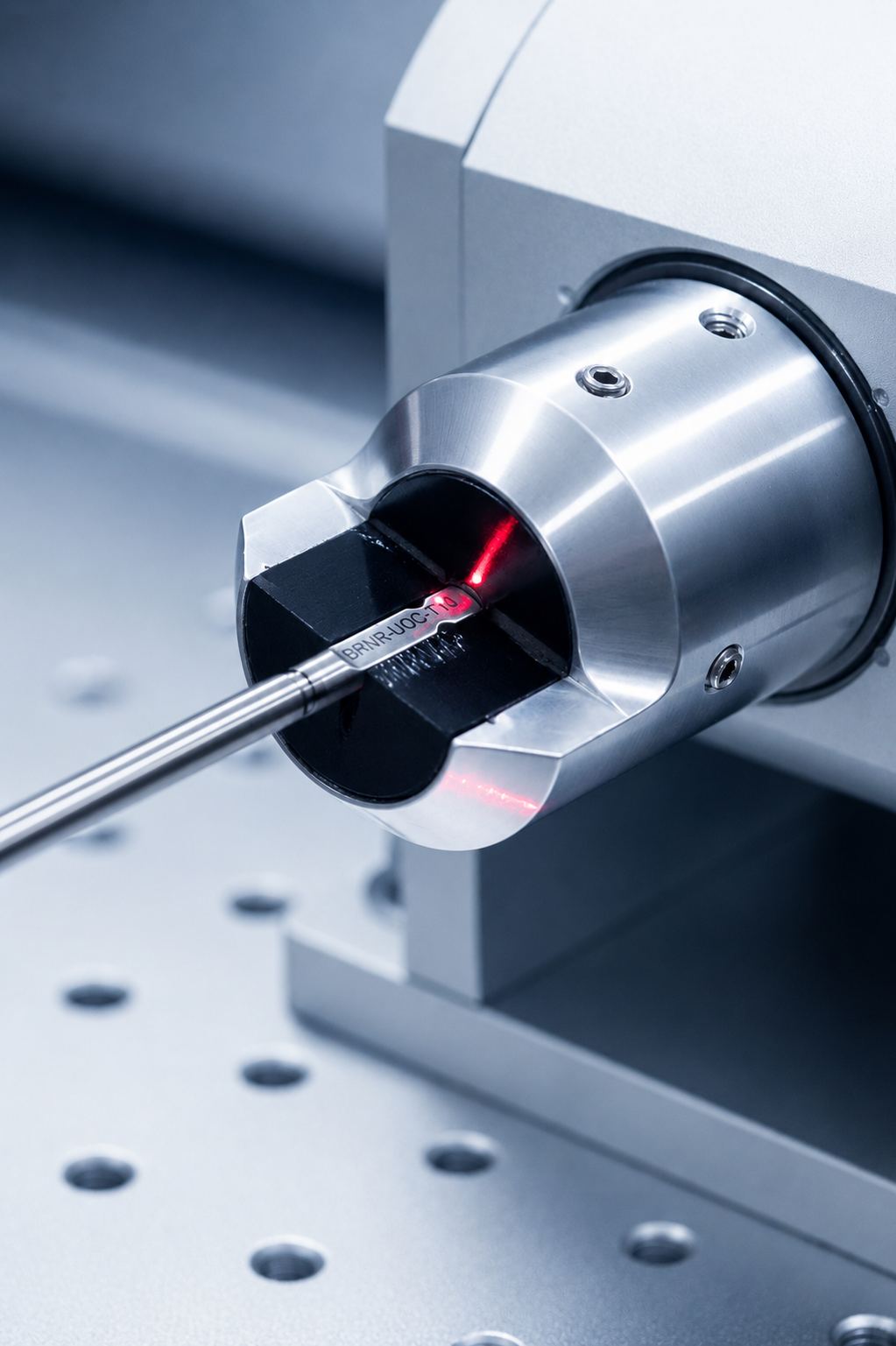
For applications where heat input matters, LaserMed Tech uses picosecond ultra-short pulse laser technology to remove material with minimal thermal impact. This enables precise, high-contrast marking while minimizing heat-affected zones, discoloration, and changes to the surrounding material. ultra-short pulse laser marking is especially valuable for medical-device components, passivated or electropolished surfaces, thin features, and other heat-sensitive applications where maintaining surface integrity is critical.
Common questions
Still have questions?
Reach out to our owners directly — we'll walk you through it.
You might also be interested in

Assembly and Packaging
Learn more
Precision Cleaning and Passivation for Medical-Grade Parts
Learn more
Design and Product Development for Precision Manufacturing
Learn more
3D Printing and Rapid Prototyping for High-Spec Parts
Learn more
Custom Tooling & Process Solutions
Learn more
Prototype Composite and Silicon Molding for Short Runs
Learn more
Accelerate your time to market.
Reach out to our owners directly. Rapid prototyping, precision laser processing, and production-ready solutions — on your timeline.